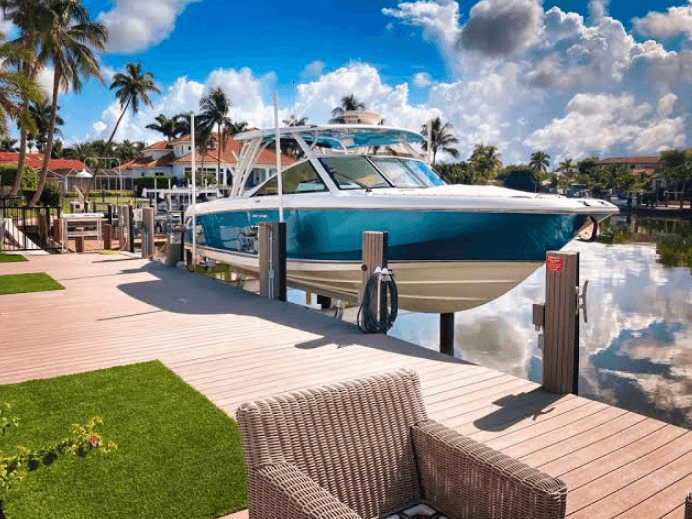
Owning a boat near the coast comes with many benefits, but protecting that boat from water, weather, and everyday wear requires the right equipment. A quality boat lift can make a major difference in how easily you store your vessel and how well you protect it between trips. For homeowners and boat owners in coastal South Carolina, choosing the right lift means considering the boat’s size, weight, water conditions, dock design, and long-term maintenance needs.
Why a Boat Lift Is Important
Leaving a boat in the water for extended periods can expose it to several problems. Saltwater can accelerate corrosion, while constant exposure to waves and changing water levels can place stress on the boat and its components. Marine growth can also accumulate on the hull, increasing the amount of cleaning and maintenance required.
A boat lift raises the vessel above the water when it is not being used. This can help reduce prolonged exposure to water and make routine cleaning and inspections easier. It can also provide a convenient way to move the boat in and out of the water without repeatedly using a trailer.
For coastal property owners, a properly selected lift can therefore be both a convenience and an important part of a boat-maintenance strategy.
Consider Your Boat’s Size and Weight
One of the first things to determine is the boat’s total weight. The lift needs sufficient capacity to safely support the vessel, including its typical equipment, fuel, batteries, and other items that may remain onboard.
Boat length and beam width are also important. A lift designed for a smaller fishing boat may not be appropriate for a larger center-console boat, pontoon, or cabin cruiser.
Before purchasing or installing a system, carefully check the manufacturer’s specifications. Choosing equipment based only on the boat’s length can result in an unsuitable installation if the total weight or beam is greater than the system can accommodate.
Think About Your Waterfront Conditions
Every waterfront property has different conditions. Water depth, tidal movement, wave exposure, dock configuration, and bottom conditions can influence which type of lift works best.
Coastal locations may experience significant changes in water level. A lift should be positioned and configured so the boat can be launched and stored safely despite those changes.
If you are located in the Myrtle Beach area, working with a marine-service professional who understands local waterfront conditions can make the selection process easier. For example, Boat and Cargo Lifts Carolinas provides information and services related to marine lifting systems in South Carolina.
Explore Different Types of Boat Lifts
Boat lifts are available in several configurations. Common options include vertical lifts, elevator-style lifts, hydraulic systems, and other designs intended for specific waterfront applications.
A vertical lift can be a practical option for many fixed docks and waterfront properties. Elevator-style systems may be useful where the dock configuration or water depth requires a different approach.
The best choice depends on the property as much as the boat. A system that works well for one waterfront home may not be suitable for another.
This is why it is helpful to evaluate the dock, shoreline, water depth, and vessel together instead of selecting a lift based solely on price.
Pay Attention to Construction Materials
Coastal environments can be demanding on metal components and mechanical equipment. Saltwater and humidity can contribute to corrosion, making material selection an important consideration.
Look for equipment designed for marine environments and ask about the materials used in structural and mechanical components. Properly selected materials can contribute to the system’s durability and reduce maintenance concerns over time.
However, even high-quality equipment requires care. Regular inspections, cleaning, lubrication where appropriate, and checking mechanical components can help identify potential problems before they become major repairs.
Installation Matters as Much as Equipment
A quality lift can still create problems if it is installed incorrectly. The supporting structure, mounting points, electrical components, and alignment all need to be appropriate for the particular property.
Professional installation can also help ensure that the lift is positioned correctly relative to the dock and water. This is particularly important in areas affected by tides, changing water levels, and coastal weather.
If you are researching options for Cargo lift Myrtle Beach SC, consider both the equipment and the experience of the company handling the installation. The right service provider should understand marine applications and be able to evaluate the specific requirements of your property.
Consider Long-Term Maintenance
Before choosing a boat lift, think beyond the initial installation. Ask how frequently the system should be inspected and what replacement parts or routine maintenance may eventually be required.
Keeping the lift clean and checking for signs of corrosion, unusual noises, loose hardware, or mechanical wear can help extend its useful life. Electrical components should also be inspected periodically, especially in a wet coastal environment.
Boat owners should avoid waiting until the lift stops working before arranging maintenance. Preventive attention can help reduce unexpected downtime and protect both the equipment and the boat.
See also: Trwho.com Tech: Innovative Tech Solutions for Modern Businesses
Safety Should Always Come First
A boat lift is designed to support significant weight, so safety should never be treated as an afterthought. Never exceed the manufacturer’s rated capacity, and make sure the boat is positioned correctly before raising or lowering it.
Keep people away from moving components and follow the manufacturer’s operating instructions. Electrical systems should be installed and serviced according to applicable safety requirements.
If something appears damaged or does not operate normally, stop using the lift until the issue has been properly evaluated.
Choosing a Marine Lift Service
The right marine-service company can help simplify the entire process. Look for a provider that understands different lift systems, waterfront conditions, installation requirements, and ongoing maintenance.
Ask questions about load capacity, installation, materials, maintenance, warranty coverage, and service availability. A knowledgeable provider should be willing to explain why a particular system is appropriate rather than simply recommending the most expensive option.
For South Carolina boat owners, resources such as boatandcargoliftcarolinas.com can also help when researching marine lifting solutions and services.
Final Thoughts
Choosing a boat lift is an investment in convenience, protection, and long-term boat care. The best system should match the vessel, waterfront property, water conditions, and owner’s maintenance expectations.
Take time to compare lift designs, confirm weight capacity, consider marine-grade construction, and evaluate installation requirements before making a decision. Professional guidance can also help prevent costly mistakes and ensure the system is suitable for the property.
With the right equipment and regular maintenance, a boat lift can make waterfront ownership easier while helping keep your vessel safely stored above the water when it is not being used.