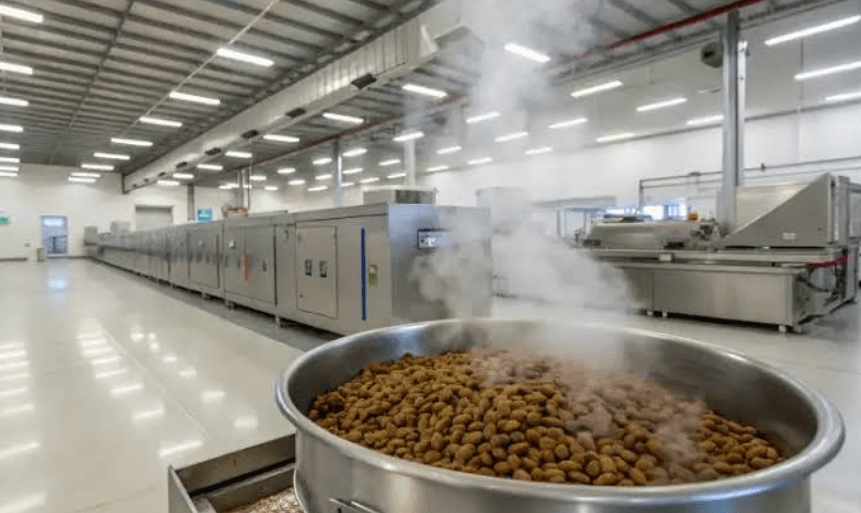
The packaging industry has changed significantly as manufacturers look for faster production, better product protection, and more consistent packaging quality. Food and pet product companies are particularly dependent on efficient packaging systems because their products often require reliable sealing, accurate filling, attractive presentation, and protection from moisture, air, contamination, and handling damage.
Modern packaging machinery brings together mechanical systems, automation, filling technology, sealing equipment, and control systems to create efficient production environments. For companies producing snacks, dry foods, pet treats, grains, powders, and similar products, the right machinery can have a direct impact on production capacity and packaging consistency.
The Growing Role of Automated Packaging
Automation has become an important part of modern manufacturing. Manual packaging processes can require significant labor and may produce variations in filling weights, sealing quality, and production speed. Automated machinery provides greater consistency while allowing production teams to focus on other parts of the manufacturing operation.
Packaging machines can perform multiple stages of the process, including product feeding, measuring, bag forming, filling, sealing, coding, and discharge. When these functions operate as an integrated system, manufacturers can reduce unnecessary handling and create a smoother production workflow.
Automation is especially useful for businesses handling large production volumes. Consistent machine operation can help manufacturers maintain predictable output while reducing interruptions associated with manual packaging.
Pouch Packaging for Food Products
Pouch packaging has become widely used across the food industry. Flexible pouches are suitable for many products, including snacks, coffee, grains, dried foods, sauces, and other consumer goods.
Their popularity comes from a combination of convenience, product protection, and visual appeal. Pouches can be produced in different shapes and sizes, allowing brands to package products according to their specific requirements.
Modern pouch machines can support different filling and sealing configurations. Depending on the product, machinery may be designed for solid products, granules, powders, liquids, or other materials.
The machinery selected for a pouch application needs to match the physical characteristics of the product and the packaging material. A machine designed for one product category may not deliver the same performance with another.
Packaging Machinery for Pet Products
Pet food and pet treats represent another important application for automated packaging systems. Products such as dry pet food, treats, biscuits, supplements, and other animal nutrition products require dependable packaging to maintain freshness and protect them during transportation and storage.
Packaging formats can range from small pouches to larger bags. The appropriate system depends on the product’s weight, density, shape, packaging material, and expected production volume.
Accurate weighing is particularly important in pet product packaging. Consistent filling helps manufacturers maintain product specifications and reduce unnecessary product giveaway. Reliable sealing also helps protect the contents from environmental exposure.
As the pet food market continues to expand, manufacturers increasingly rely on automated packaging systems capable of supporting different package sizes and product formats.
Turnkey Packaging Lines
A complete packaging line can connect several stages of production rather than relying on individual machines operated separately. A turnkey system may integrate feeding, weighing, filling, bag forming, sealing, metal detection, check weighing, coding, and finished-product handling.
This integrated approach can simplify production management. Instead of coordinating multiple disconnected machines, manufacturers can operate a more unified system.
Turnkey solutions can also be designed around the requirements of a particular product and facility. Production volume, available floor space, packaging format, and automation requirements can all influence the configuration.
Businesses researching machinery suppliers may find resources such as Pallas useful when comparing packaging equipment and complete production solutions.
Importance of Machine Compatibility
Packaging equipment performs best when each component is compatible with the product and packaging material. Product characteristics such as particle size, moisture level, density, viscosity, and flow behavior can influence machine selection.
Packaging film also affects performance. Different materials have different sealing properties, thicknesses, and mechanical characteristics. The forming and sealing system must therefore be suitable for the selected packaging material.
A complete packaging line should be considered as one production system. Feeders, weighing systems, filling equipment, bag-making units, sealers, conveyors, and inspection equipment need to work together efficiently.
Production Efficiency and Quality Control
Modern packaging machinery can improve both production efficiency and quality control. Automated systems can maintain consistent filling operations and repeatable sealing performance throughout a production run.
Inspection equipment can provide additional quality control. Check weighing systems can identify weight variations, while metal detectors and other inspection technologies can help manufacturers identify unwanted materials before products reach customers.
Automation also provides opportunities for monitoring production data. Depending on the system, operators may be able to monitor machine performance, production counts, operating conditions, and other information through a centralized control interface.
Selecting a Suitable Machinery Supplier
Choosing a machinery supplier is an important part of developing a packaging operation. Equipment quality matters, but technical support, customization capabilities, spare parts availability, installation assistance, and after-sales service can also influence the long-term value of the investment.
Manufacturers should consider whether a supplier has experience with their specific product category and packaging format. A company handling dry pet food may have different requirements from a business producing powdered food ingredients or liquid sauces.
It is also useful to evaluate whether the supplier can provide individual machines or complete turnkey lines as production requirements develop.
Businesses comparing packaging machine manufacturers in China can examine machinery specifications, production capabilities, automation options, and support services before selecting equipment.
See also: Trwho.com Tech: Innovative Tech Solutions for Modern Businesses
The Future of Packaging Automation
Packaging technology continues to move toward greater automation, flexibility, and operational efficiency. Manufacturers increasingly need systems capable of handling multiple package sizes and product types without extensive downtime between production runs.
Smart controls, automated inspection, improved sensors, and more flexible machine configurations are becoming important features in modern packaging environments.
Sustainability is another factor influencing packaging development. Manufacturers are exploring lighter packaging materials and new flexible-film structures while still requiring reliable machine performance and strong seals.
The result is a packaging industry where machinery must balance productivity, product protection, flexibility, and operational efficiency.
Conclusion
Modern packaging machinery has become an essential part of food and pet product manufacturing. Automated pouch machines, filling systems, sealing equipment, inspection technology, and turnkey production lines allow manufacturers to achieve consistent packaging while supporting larger production volumes.
The most suitable system depends on the product, package format, production requirements, facility, and desired level of automation. Careful equipment selection and cooperation with an experienced machinery supplier can help manufacturers build packaging operations that remain efficient and adaptable as their businesses grow.
As consumer expectations and production requirements continue to evolve, reliable packaging technology will remain an important part of successful food and pet product manufacturing.